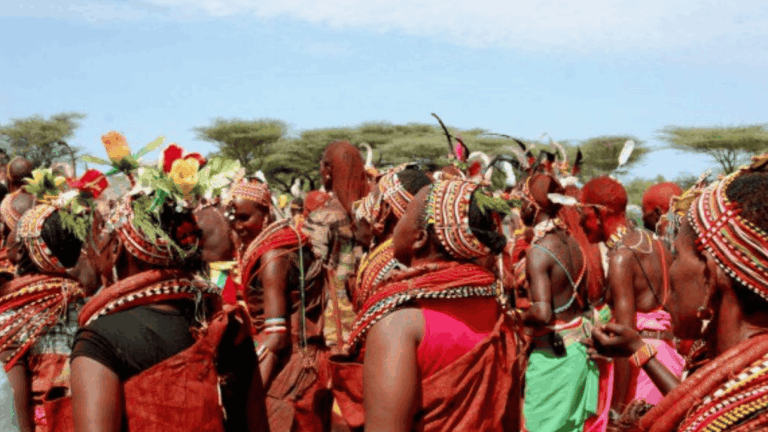
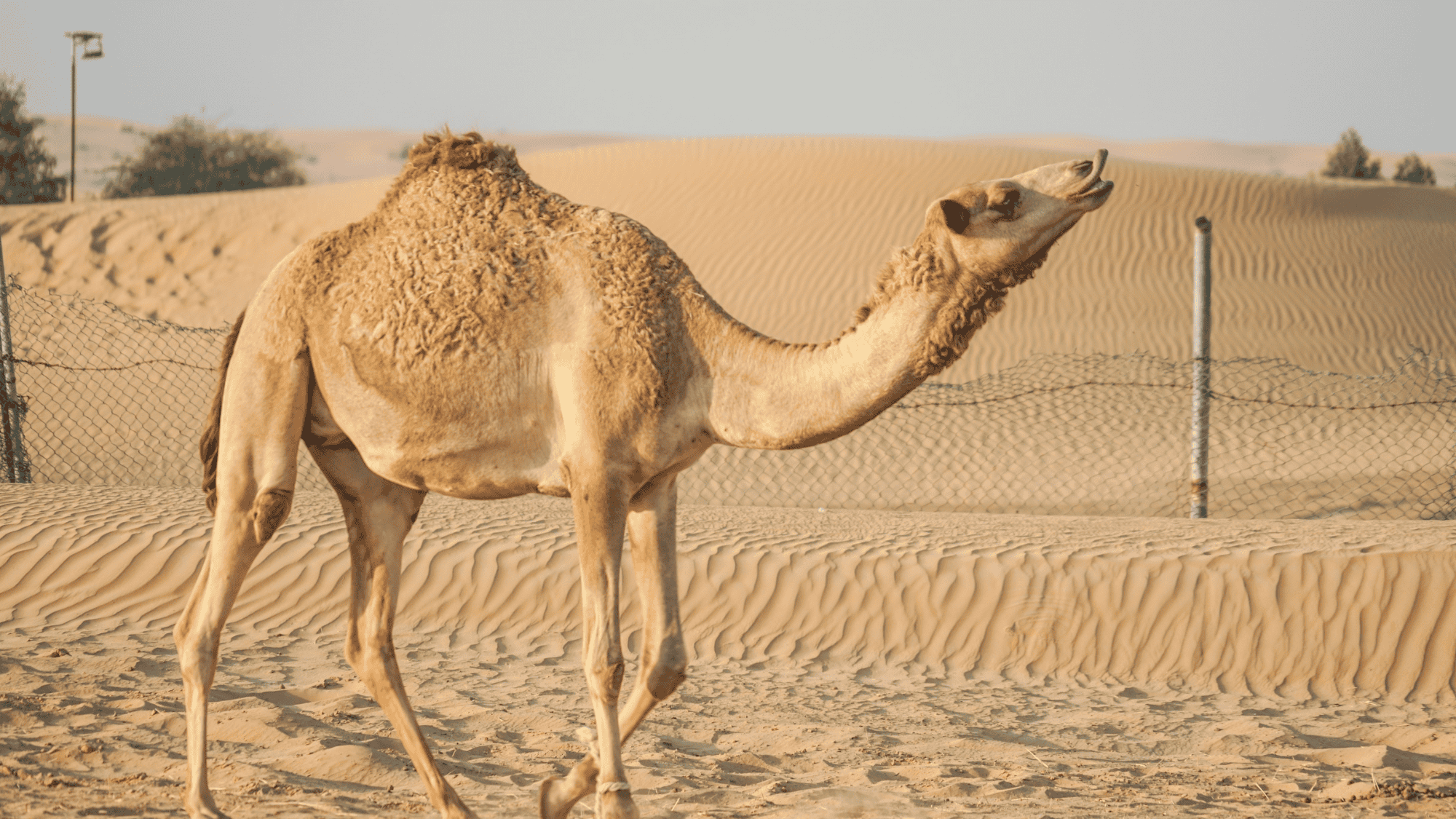
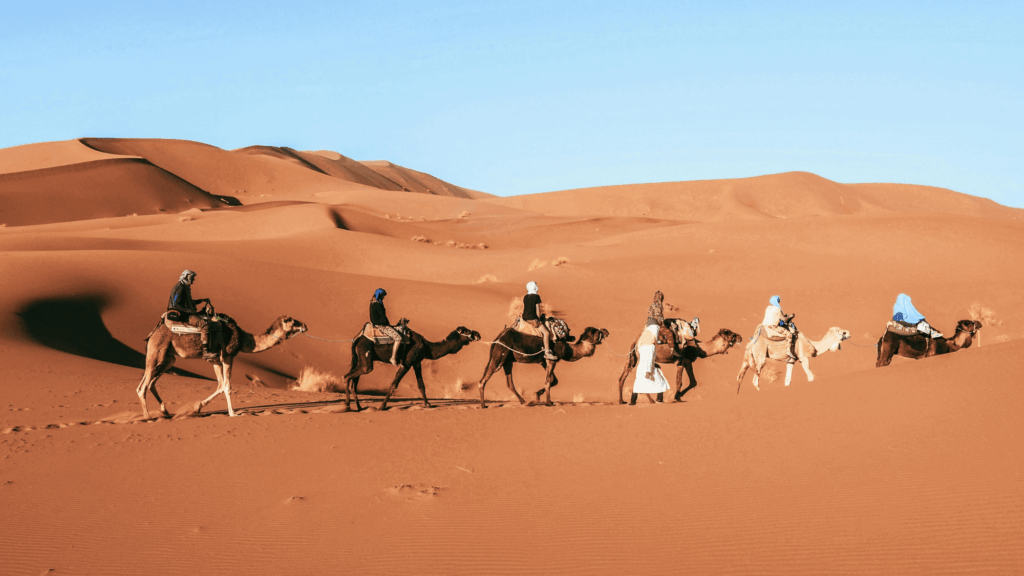
Camel treks across the Chalbi Desert are journeys defined by distance, rhythm, and exposure. This experience follows traditional nomadic travel routes, moving slowly across vast desert landscapes where scale, silence, and endurance shape every decision.
It is a physical and mental journey that reveals the land as nomads experience it — step by step, horizon by horizon.
Where the Experience Takes Place
The Chalbi Desert
A stark, expansive desert of sand, volcanic stone, and salt flats stretching between Marsabit, North Horr, and the Ethiopian border. The terrain shifts constantly — firm ground gives way to soft sand, then open flats, then rocky stretches.
Routes are determined by:
- Water availability
- Seasonal conditions
- Traditional grazing paths
- Weather and wind patterns
Life on Camelback
Camels are central to desert travel. You learn:
- How camels are loaded and balanced
- Basic riding techniques and posture
- How guides read camel behavior and endurance
- Why camels are uniquely suited to desert survival
Movement is steady and deliberate. Distances that appear short take hours to cross.
A Day on the Trek
Morning: Breaking Camp
Days begin early. The camp is dismantled quickly. Fires are extinguished. Camels are loaded. After a simple breakfast, the trek begins while temperatures are still manageable.
Midday: Movement & Navigation
Treks continue through open terrain, guided by:
- Sun position
- Wind direction
- Landmarks invisible to untrained eyes
Stops are brief and purposeful. Water is conserved. Shade is valued.
You feel distance in your body — shoulders, legs, attention.
Afternoon: Arrival & Camp Setup
By late afternoon, camp is established near a planned stop.
You participate in:
- Unloading camels
- Gathering firewood
- Preparing meals
- Setting up sleeping areas
The desert quiet deepens as movement slows.
Evening: Fire, Food & Sky
Evenings are simple and profound.
Meals are cooked over open fires. Stories are shared quietly. The sky expands fully, revealing dense stars unobstructed by light pollution.
Temperatures drop sharply. Silence becomes tangible.
Physical & Mental Challenge
Camel treks are physically demanding.
You experience:
- Long hours outdoors
- Heat, wind, and dust
- Physical fatigue balanced by mental clarity
- A deep sense of scale and isolation
The thrill comes from exposure and movement, not speed.
Travel Style & Logistics
- Multi-day or single-day treks available
- Accompanied by experienced desert guides and camel handlers
- Camping is simple and functional
- Supplies are carefully managed and limited
Safety and pacing are prioritized.
What Travelers Should Be Prepared For
- Moderate physical endurance
- Comfort with basic camping conditions
- Limited water and facilities
- Trust in guides and the rhythm of the land
This experience rewards preparation and presence.
Who This Experience Is Best For
Camel treks suit travelers who:
- Seek physical engagement with the landscape
- Appreciate slow travel
- Are comfortable with solitude and silence
- Want a visceral understanding of desert scale
It is ideal for adventurers, photographers, and those drawn to expedition-style travel.
The Lasting Impact
Camel treks reshape how distance, time, and movement are understood.
You leave with:
- A bodily sense of the desert’s vastness
- Respect for nomadic knowledge and endurance
- A quiet confidence earned through effort
This is travel reduced to essentials: land, movement, and presence.